Computer Systems Organization & Architecture By Carpinelli Free Download
Computer Organisation Organisation
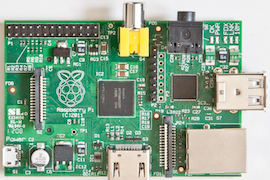
A computer organisation is made up of various components. The components can be hardware or software. Because these systems are and then massively complex, the components are organized in layers.
Layers of Organization
Modernistic computer systems have a layered organization, which each layer either using the services of, or being physically built from, entities on the level directly below it.
| Layer | People | Domain |
|---|---|---|
| Application Programs | Application Programmers | Software |
| System Utility Programs | System Programmers | |
| Operating System | ||
| I/O Arrangement (BIOS) | ||
| Estimator System | Computer Engineers | Hardware |
| CPU | Computer Architects | |
| Memories, Logic Circuits, Flip-Flops, Gates | Logic Designers | |
| Transistors, Diodes, Resistors, Power Supplies | Materials Scientists |
Exercise: Research "firmware." How does firmware fit into this table?
The Estimator System Layer
The computer systems nosotros build today feature programmable processing units which interact with a number of devices, each controlled past an I/O controller, and using memory.
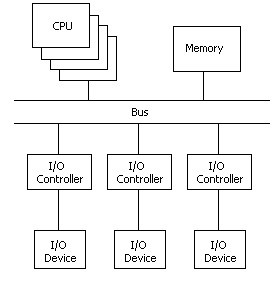
Conspicuously, this picture is an oversimplification. Each CPU tin can take one or more than cores. There may exist additional kinds of processors, including GPUs and TPUs. Retention itself is layered (cache memory, master memory, secondary memory). Machines themselves are networked, giving the appearance of one large machine fabricated upwardly of smaller ones.
Devices are roughly classified into input devices, output devices and storage devices. Examples include:
| Devices | ||
|---|---|---|
| Input Devices | Output Devices | Storage Devices |
| Keyboard Mouse Light Pen Joystick Joyswitch Trackball Tablet Track Pad Surface Digitizer Microphone Vocalism Recognizer Scanner Fingerprint Scanner Card Reader Paddle Game Controller Data Glove Wand Video Camera Eye Tacker Motion Sensor | Screen Television Printer (2nd or 3D) Plotter Film Recorder Projector Hologram Generator Robot Arm Speaker Headphones Phonation Synthesizer Menu Dial | Disk Bulldoze CD Drive DVD Drive USB Wink Bulldoze Solid Land Drive (SSD) Tape Bulldoze |
Practise: What other devices are you aware of?
Software Layers
Software can be roughly divided into systems software and applications software. The dividing line is fuzzy, but the basic concepts are:
| Applications Software | Systems Software |
|---|---|
| Written for people | Written for computers |
| Deals with man-centered abstractions like customers, products, orders, employees, players, users | Deals with computer-centered concepts like registers and memory locations |
| Solves bug of interest to humans, commonly in awarding areas like health intendance, game playing, finance, etc. | Controls and manages computer systems |
| Concerned with annihilation loftier-level | Concerned with information transfer, reading from and writing to files, compiling, linking, loading, starting and stopping programs, and fifty-fifty picayune with the individual bits of a small word of retentivity |
| Is virtually always device or platform independent; programs concentrate on full general-purpose algorithms | Deals with writing device drivers and operating systems, or at to the lowest degree directly using them; programmers exploit this low-level knowledge |
| Is often done in languages similar JavaScript, Perl, Python, Ruby, Lisp, Elm, Java, and C# that characteristic automated garbage collection and free the programmer from low-level worries | Is frequently done in associates linguistic communication, C, C++, and Rust where programmers have to manage memory themselves |
| Is done in languages that generally accept big fat runtime systems | Generally feature extremely small-scale run-time images, considering they often have to run in resource constrained environments |
| If done properly, can be very efficient: good garbage collection schemes allow much more efficient memory utilization than the usual memory micro-management common in C programs | If done properly, can be very efficient: you tin can take advantage of the hardware |
There are different levels of programming languages: Loftier-level languages, Associates Languages, Machine Languages. A machine language is what a processor runs. It'south pure binary. A assembly linguistic communication has instructions that map i-to-ane to car language instructions. A high-level linguistic communication uses far more abstruse concepts to describe computations. Often, people write in a high-level language, which a compiler translates to assembly language, which an assembler translates into automobile language:

Hither'southward an example. First with this C++ function:
long example(long x, long y, long z) { if (x > y) { return x * y - z; } else { render (z * y) * y; } } The compiler produces this associates language:
_Z7examplelll: cmp rdi, rsi jg .L5 imul rdx, rsi mov rax, rdx imul rax, rsi ret .L5: mov rax, rdi imul rax, rsi sub rax, rdx ret
which becomes this in motorcar linguistic communication:
4839F7 7F0C 480FAFD6 4889D0 480FAFC6 C3 4889F8 480FAFC6 4829D0 C3
Why Written report Assembly Linguistic communication?
You are better learning associates than not learning information technology. For one thing, it enables a more intimate and hands-on study of computer systems:
Associates is a mechanism by which a developer tin can learn details of computer hardware, CPU components, retentiveness organization, and the interactions among these elements of figurer compages.— Brian Hall and Kevin Slonka
Other reasons:
- Knowing the hardware educational activity fix may help you lot make meliorate decisions in high-level language programming (you'll accept a good sense of optimization).
- You'll acquire lots of interesting things yous can do with chip manipulation.
- Yous'll larn how arithmetic really works, and how office calls, and closures, and loops, and conditionals, and fifty-fifty parallel ciphering, actually work.
- You lot may need to write software for device drivers, embedded systems, or software VMs.
Topics in Calculator Systems
Here are things to study to go a good well-rounded familiarity with computer systems and systems programming:
- The nature of data and ciphering (information theory)
- What a computer can do (computability) — and can do efficiently (complexity)
- How data (numbers, text, programs) are encoded and decoded
- Digital Logic
- How CPUs work (fetch-execute cycle, context-switching, retention segments)
- The organization and components of a calculator system
- Memory, caches, and storage devices
- Assembly and Machine Languages
- The C Programming Language (and others similar it)
- Compilation, assembly, linking, loading, and execution
- Basic operating arrangement functionality (file, process, and retention management)
- Interfacing with the O.S.
- Arrangement-level I/O
- Compiling, assembling, linking, loading
- Optimizing programs
- Exploiting systems
- Defending systems from attack
- File formats
- Advanced operating system functionality (virtual memory, interrupts, bootstrapping)
- Device Drivers
- Concurrency nuts: threads and events
- Networking basics
Wikipedia has articles on systems programming and system software.
In Popular Culture
Things to browse showing aspects of reckoner systems might touch on your life:
- Meltdown and Spectre
- More on Meltdown and Spectre
DOWNLOAD HERE
Posted by: knighthapt1947.blogspot.com


0 Komentar
Post a Comment